
 HELP ME PLAN

 HELP ME PLAN
Best Lodges in Serengeti National Park — Expert-Ranked Guide for 2026
The Serengeti National Park is home to some of the finest safari lodges in Africa — ranging from remote fly-in tented camps positioned along migration routes to permanent luxury lodges with sweeping plains views. Choosing the right Serengeti accommodation depends on when you travel, where the Great Migration is at that time of year, and what style of safari experience you’re seeking.
Key Takeaways
- The Serengeti spans ~14,763 km² — lodge location matters enormously; the central, northern, and western corridors offer very different wildlife dynamics at different times of year.
- The Great Migration (~1.5 million wildebeest) moves in a roughly circular, year-round circuit — the best lodge for migration viewing depends entirely on your travel dates.
- Singita is the benchmark in the Serengeti for ultra-luxury — operating multiple lodges, camps and private villas across Grumeti and Lamai.
- The northern Serengeti (Lamai / Mara River area) is the prime zone for dramatic river crossings from approximately July to October.
- The southern Serengeti and Ndutu plains are best for calving season (January–March) — offering exceptional predator action.
- Fly-in access is common for mid-to-upper-range lodges; several airstrips are served from Arusha and Kilimanjaro, with connections from Nairobi requiring immigration formalities.
—
Which Area of the Serengeti Should You Stay In?
The single most important decision when choosing a Serengeti lodge is area, not brand. The park is roughly the size of Northern Ireland, and the wildlife — particularly the Great Migration — shifts dramatically across seasons.
Southern & Central Serengeti: The central Seronera region is the park’s year-round wildlife heartland. The Seronera River system attracts resident populations of lion, leopard, and cheetah. For calving season (January–March), the main areas are farther south, particularly the southern Serengeti and Ndutu plains. Large numbers of wildebeest calves attract intense predator activity, especially from lions, cheetahs, and spotted hyenas. Mobile camps follow the migration, while permanent Seronera lodges offer excellent resident wildlife viewing throughout the year.
Western Corridor (Grumeti River): The wildebeest typically reach the Western Corridor between May and July, with opportunities to witness Grumeti River crossings. Singita’s Grumeti properties occupy a privately managed area of approximately 350,000 acres adjoining the national park. &Beyond Grumeti Serengeti River Lodge is a separate property within the national park and does not share those exclusive traversing rights.
Northern Serengeti (Kogatende / Lamai): This is the region most visitors picture when they imagine the Serengeti — the Mara River crossings, approximately July through October. Wildebeest and zebra cross crocodile-filled waters in some of Africa’s most spectacular wildlife scenes. Kogatende- and Lamai-area camps are well positioned for the crossing areas. Klein’s Camp occupies a separate private concession in the northeastern Serengeti and requires a substantial drive to reach the Mara River crossings.
—
What Are the Best Luxury Lodges in the Serengeti?
The Serengeti offers accommodation ranging from intimate tented camps to luxury lodges with extensive facilities. The right choice depends on your budget, preferred safari style, and whether you want year-round resident wildlife viewing or a seasonal base near the Great Migration.
One Nature Nyaruswiga Serengeti
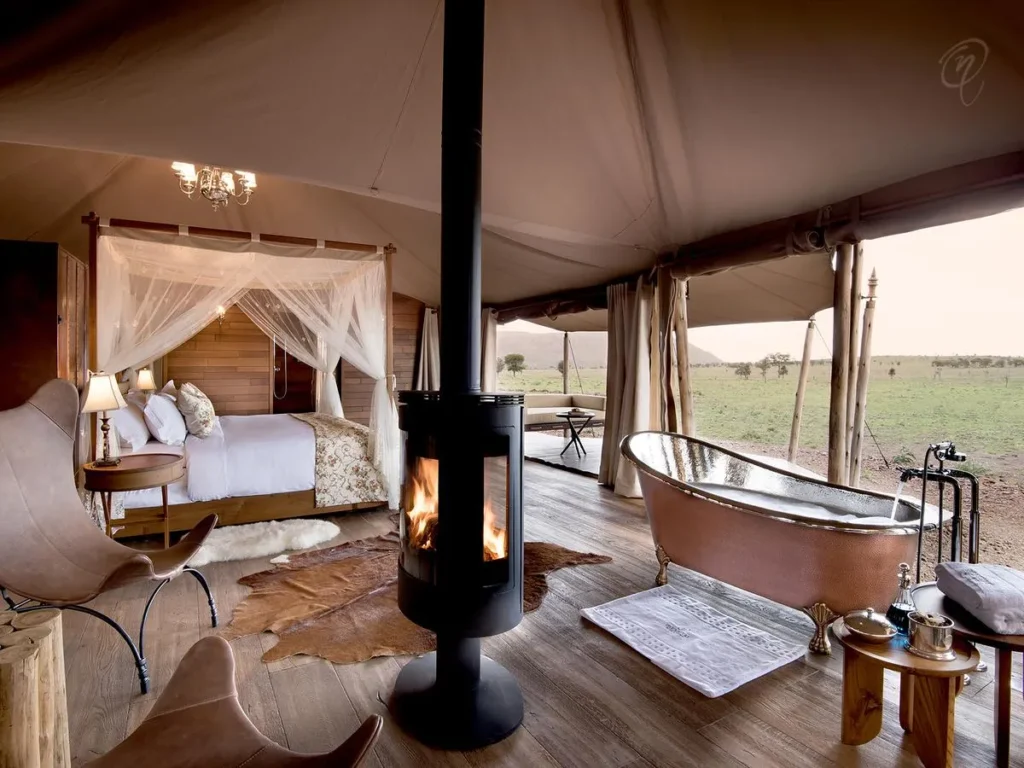
One Nature Nyaruswiga offers a luxury tented safari experience in the central Serengeti’s Seronera region. Spacious accommodation combines the atmosphere of sleeping under canvas with refined interiors and views across the surrounding landscape.
Its central location makes it a strong choice for travellers seeking resident wildlife throughout the year, rather than choosing their accommodation solely around seasonal migration movements.
Key facts: Luxury tented accommodation | Central Serengeti, Seronera | Year-round wildlife viewing
Four Seasons Safari Lodge Serengeti
Four Seasons Safari Lodge Serengeti combines a central Serengeti location with the facilities of a full-service luxury lodge. Rooms, suites, and villas overlook the savannah, with selected accommodation facing an active waterhole visited by elephants and other wildlife.
The infinity pool overlooking the waterhole is a distinctive feature, allowing guests to watch wildlife between game drives. It suits travellers who want generous lodge facilities alongside their safari activities.
Key facts: Rooms, suites, and villas | Central Serengeti | Infinity pool overlooking a wildlife waterhole
Serengeti Serena Safari Lodge
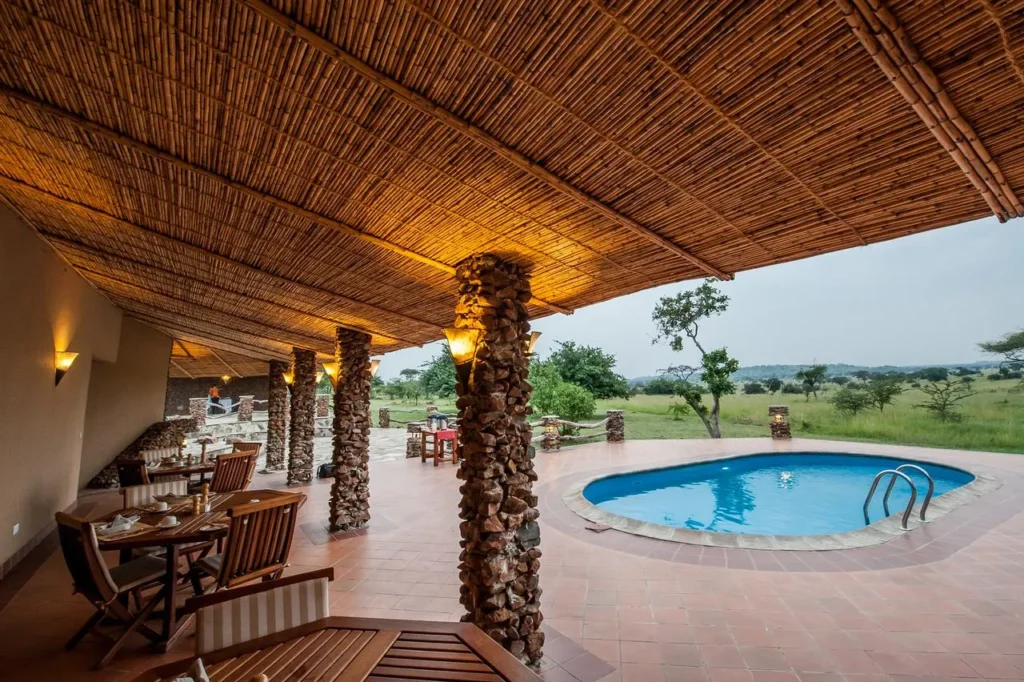
Serengeti Serena Safari Lodgeoccupies an elevated, acacia-lined ridge overlooking the Serengeti plains. Its traditional African-inspired architecture gives it a different character from the region’s canvas camps, while the swimming pool and communal areas provide comfortable spaces to relax between drives.
It is an established lodge option for travellers who prefer permanent accommodation and convenient facilities as part of a Serengeti safari.
Key facts: Permanent lodge accommodation | Elevated setting with plains views | Swimming pool, restaurant, and bar
Ang’ata Migration Camp
Ang’ata Migration Campoffers a traditional tented safari experience, with seasonal locations selected around the Great Migration. Its operation includes Ndutu in the southern ecosystem and Bologonja in the northern Serengeti.
The camp suits travellers who prioritise time in the wildlife areas and the atmosphere of sleeping under canvas. Choose the seasonal location to match your travel dates, particularly for southern calving-season visits or northern migration viewing.
Key facts: Seasonal tented camp | Ndutu and Bologonja locations | Migration-focused safari stays
Grumeti Migration Camp
Grumeti Migration Camp offers tented accommodation in the wider Grumeti area of the Serengeti ecosystem. Comfortable tents, a swimming pool, and evenings around the campfire create a relaxed base for a wildlife-focused stay.
It is an option for travellers exploring the western migration region. The presence of migrating herds depends on rainfall and their movements, so travel dates should be matched carefully to the planned safari route.
Key facts: Tented accommodation | Grumeti area, Serengeti ecosystem | Swimming pool and campfire evenings
Asanja Africa
Asanja Africa’s Moru camp offers an intimate tented safari experience among the Moru Kopjes in the south-central Serengeti. Its accommodation incorporates Maasai-inspired design, combining private en-suite facilities with the atmosphere of a small bush camp.
The camp suits travellers who prefer a smaller property and a focus on wildlife and landscape. The surrounding rocky outcrops and plains provide a distinctive setting for exploring this part of the Serengeti.
Key facts: Small tented camp | Moru Kopjes, south-central Serengeti | Maasai-inspired accommodation
—
What Is the Difference Between Central and Northern Serengeti Lodges?
The choice between central and northern Serengeti lodges is fundamentally a question of timing and intent.
Central Serengeti (Seronera) offers year-round wildlife viewing — particularly strong for leopard and lion given the Seronera Valley’s permanent water and tree cover. Rhino sightings are rare. For calving season (January–March), the main areas are the southern Serengeti and Ndutu plains rather than Seronera. Central Serengeti is also one of the park’s most accessible regions, with Seronera Airstrip and a wide choice of lodges.
Northern Serengeti is particularly well positioned for the Mara River wildebeest crossings, generally from July through October, although timing varies with rainfall and herd movements. Outside migration season, the northern Serengeti is quieter, with resident wildlife still present. Migration-focused travellers typically choose a northern camp between July and October and a southern Serengeti or Ndutu camp for calving season.
—
When Is the Best Time to Visit the Serengeti?
There is no bad time to visit the Serengeti, but the “best” time depends on what you most want to see.
| Period | Location | What to See |
|---|---|---|
| Jan–Mar | Southern Serengeti | Wildebeest calving; intense predator activity |
| Apr–May | Central & Western | Migrating herds moving towards the western areas; green landscapes |
| Jun–Jul | Western Corridor | Grumeti River crossings; dramatic predator encounters |
| Jul–Oct | Northern Serengeti | Mara River crossings; the classic “Great Migration” spectacle |
| Nov–Dec | Central Serengeti | Short rains; lush landscapes; fewer visitors; great birding |
The dry season (June–October) is peak visitor season, particularly in the north. January through March offers exceptional calving-season wildlife viewing in the southern Serengeti and Ndutu plains, with intense predator activity. Popular calving areas can be busy, and lodge rates vary by property and season.
—
How Do Serengeti Lodges Manage Vehicle Exclusivity?
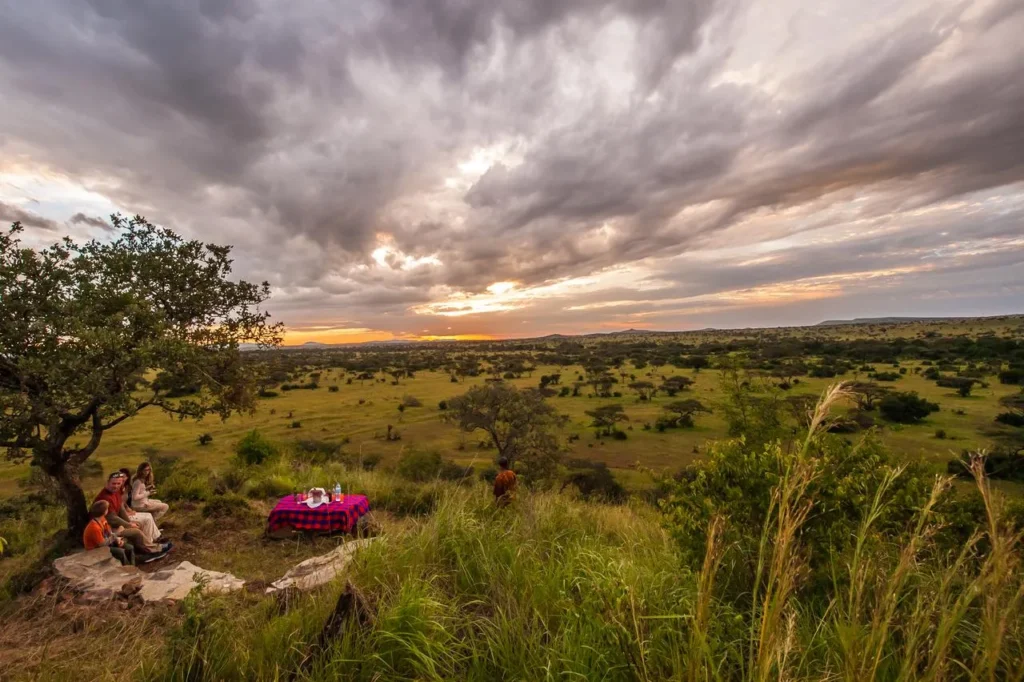
A private safari vehicle and an exclusive wildlife sighting are different things. Booking a private vehicle gives your party its own guide and vehicle, but other visitors may still share the same sightings.
- National park lodges and camps operate under Tanzania National Parks (TANAPA) rules. Game drives follow designated routes and permitted operating hours, and vehicles from different lodges and operators may gather at the same sighting.
- Private-concession lodges operate under the rules of their specific wildlife area. Some offer activities such as off-road driving, night drives, and guided walks. Access may be restricted, but an unshared sighting is not guaranteed.
For photographers or guests seeking greater flexibility, a private vehicle allows more control over the pace and focus of game drives. Confirm availability, additional charges, and the activities permitted at your chosen property before booking.
—
FAQ
What is the best lodge in the Serengeti for the Great Migration?
The best lodge for the Great Migration depends on timing and location. Ang’ata Migration Camp uses seasonal locations in Ndutu and Bologonja, making it an option for southern calving-season visits or northern migration viewing. Grumeti Migration Camp offers a base in the wider western migration region. Match your camp’s location to your travel dates, as herd movements and river crossings cannot be guaranteed.
How do I get to Serengeti National Park lodges?
Many Serengeti lodges are accessible by light aircraft from Arusha Airport (ARK), with other scheduled and charter connections depending on your itinerary. International visitors commonly arrive through Kilimanjaro International Airport (JRO) before continuing to the Serengeti.
Airstrips include Seronera, Kogatende, and Grumeti, with road transfers to the accommodation. Guided road safaris from Arusha via Ngorongoro are also common across different budgets. Driving to central Serengeti generally takes around 7–9 hours, depending on conditions and stops.
Is the Serengeti safe for first-time safari-goers?
Yes. The Serengeti is one of Africa’s most established safari destinations, managed by Tanzania National Parks (TANAPA). First-time visitors can book a guided safari with accommodation, transfers, meals, and game drives arranged in advance. Follow your guide’s instructions and the lodge’s wildlife safety rules throughout your stay.
What wildlife can I expect to see in the Serengeti beyond the migration?
The Serengeti supports a large lion population and offers excellent opportunities to see leopard, cheetah, elephant, buffalo, hippo, and a wide range of antelope species. The park also holds over 500 bird species. Even without the migration, the Seronera Valley and its surrounding plains offer rewarding game viewing throughout the year. Sightings vary by location and season.
What is the difference between a lodge and a tented camp in the Serengeti?
In practice, the distinction is primarily one of construction and atmosphere rather than comfort level. A tented camp uses canvas-walled accommodation, often with en-suite bathrooms and electric lighting. A lodge generally uses permanent structures such as stone, brick, or timber.
Luxury tented properties such as One Nature Nyaruswiga offer substantial comforts, while seasonal camps such as Ang’ata Migration Camp provide a more traditional under-canvas experience.
How much do Serengeti lodges cost per night?
Serengeti lodge pricing varies widely by property, package, and season. As a broad guide for safari packages:
- Mid-range lodges and camps: approximately USD 400–800 per person per night
- Upper-end lodges and camps: approximately USD 800–1,500 per person per night
- Ultra-luxury accommodation: approximately USD 1,500–3,000+ per person per night
These are indicative estimates rather than fixed rates. Meals, game drives, park fees, conservation charges, and transfers may be included or charged separately. Some properties quote per room rather than per person. Confirm the full package inclusions before comparing prices.
Can children visit Serengeti National Park lodges?
Yes, but minimum ages and activity restrictions vary by property. Some camps welcome young children, while others apply age limits or require a private vehicle for family game drives. Four Seasons Safari Lodge Serengeti, for example, welcomes children aged two and older.
Malaria prevention should be discussed with a travel health professional, including suitable medication and mosquito-bite precautions for each family member and your specific itinerary.
Do I need to combine the Serengeti with Ngorongoro Crater?
It is a popular combination, although not essential. Ngorongoro Crater is approximately three hours by road from Seronera, depending on conditions and your destination within the conservation area. The two destinations offer contrasting landscapes and wildlife experiences.
Ngorongoro’s approximately 260 km² crater floor supports concentrated wildlife populations, including protected black rhinos, although sightings are not guaranteed. An itinerary combining 3–4 nights in the Serengeti with 1–2 nights in the Ngorongoro area provides a rewarding introduction to Tanzania’s northern safari circuit.
—
Plan Your Serengeti Safari with a Specialist
Choosing the right lodge in the Serengeti isn’t simply a matter of picking the most impressive name — it requires matching the property’s location, concession type, and seasonal position to the dates and wildlife priorities of your specific trip. A specialist can navigate this on your behalf: securing the right rooms for the right dates, pairing the Serengeti with Ngorongoro or the Maasai Mara, and ensuring you are in the right part of the park at the right time of year.
African Safari Group is a specialist luxury safari operator with direct rates across the Serengeti’s top lodges, including Singita, &Beyond, and Asilia properties. For a no-obligation conversation about your Serengeti safari, [enquire now](https://serengetinationalparks.com/enquire-now).